Lee Murray
Microsoft
As DesignOps lead for Microsoft’s Developer Division from late 2018, I supported a team of 25+ designers spread across Redmond, Boston, London, and remote locations in Europe, plus a calendar of UX workshops, design critiques, brown-bags, and community events that lived almost entirely in email threads and Outlook invites.
The team was known internally as D3 Studio (Developer Division Design). The problem was visibility: designers in one timezone had no awareness of what was happening in another, events clashed or repeated poorly, and most went unnoticed. We needed a low-friction way to surface the rhythm of the team without adding another tool to anyone’s workflow.
The answer was an always-on ambient display, named Vegas after the building’s corridor screens. The brief was useful at a glance, never demanding attention.
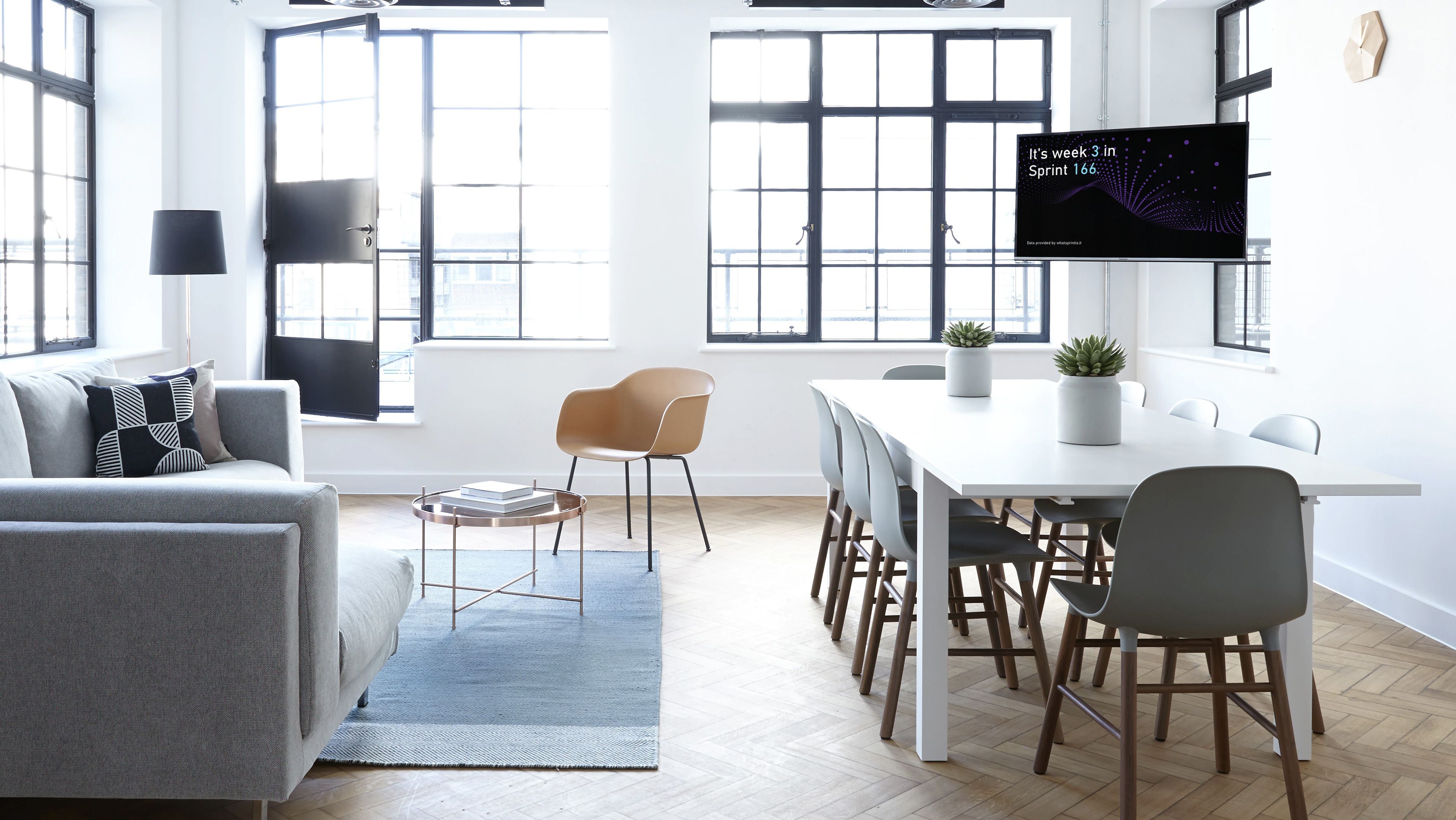
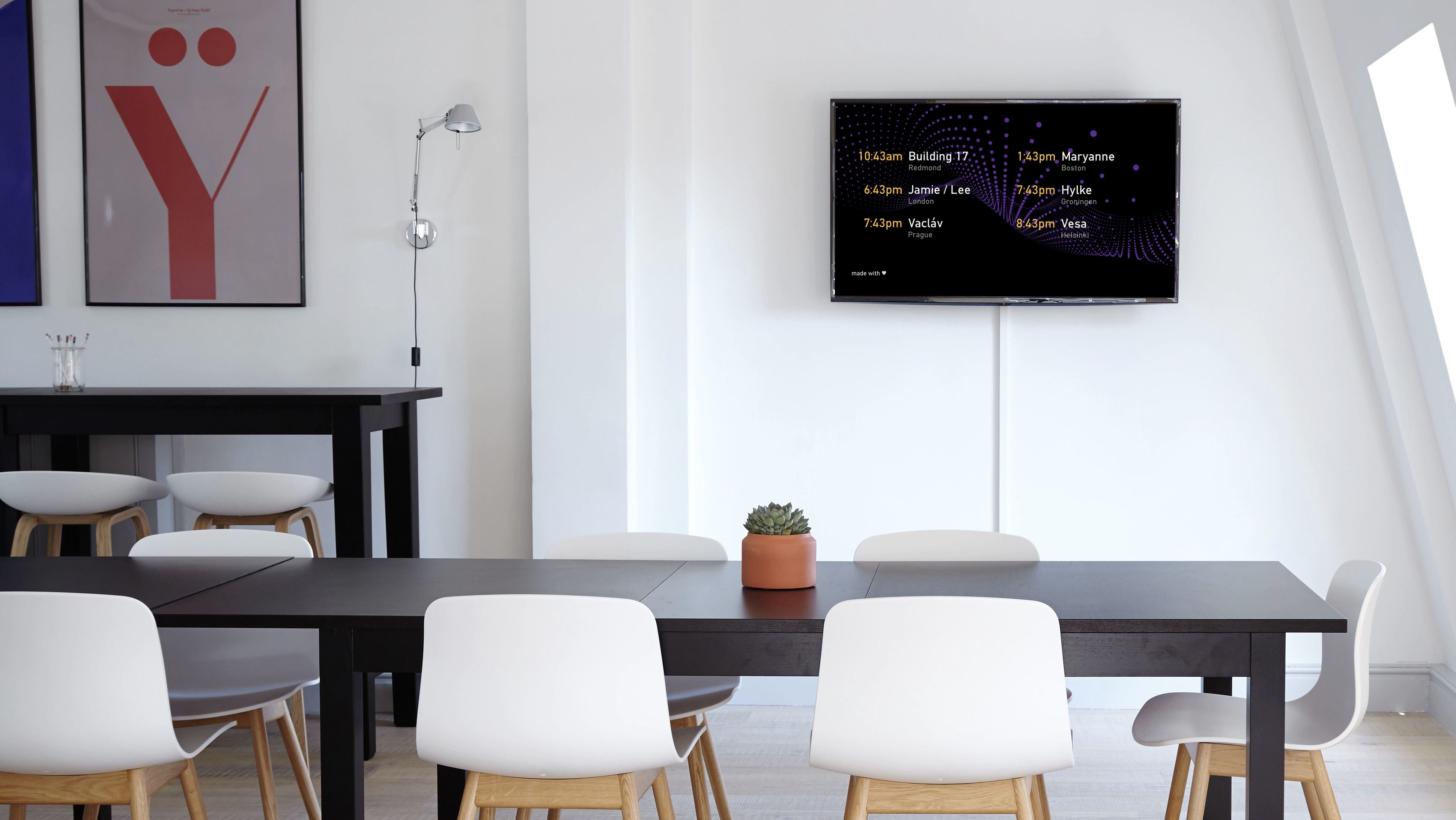
Vegas ran on large-format screens in the main thoroughfares of Building 17 in Redmond. It pulled from a shared calendar feed and rendered a rolling view of upcoming UX events alongside a world-clock panel for Redmond, Boston, and London.
A centrepiece of the calendar was UxBoard, a twice-weekly UX review where designers showed work-in-progress to PMs and engineers. Cross-functional attendance had always been hard. Vegas helped on two fronts: it made the sessions visible at all, and it gave a countdown reminder to anyone walking past on the way to another meeting.
Vegas rotated through panels on a fixed interval, each pulling from a different source. The backbone was the team calendar: UxBoard sessions, design reviews, brown-bags, and community events; a world clock for Redmond, Boston, London, and remote European locations; and the active D3 Studio sprint number.
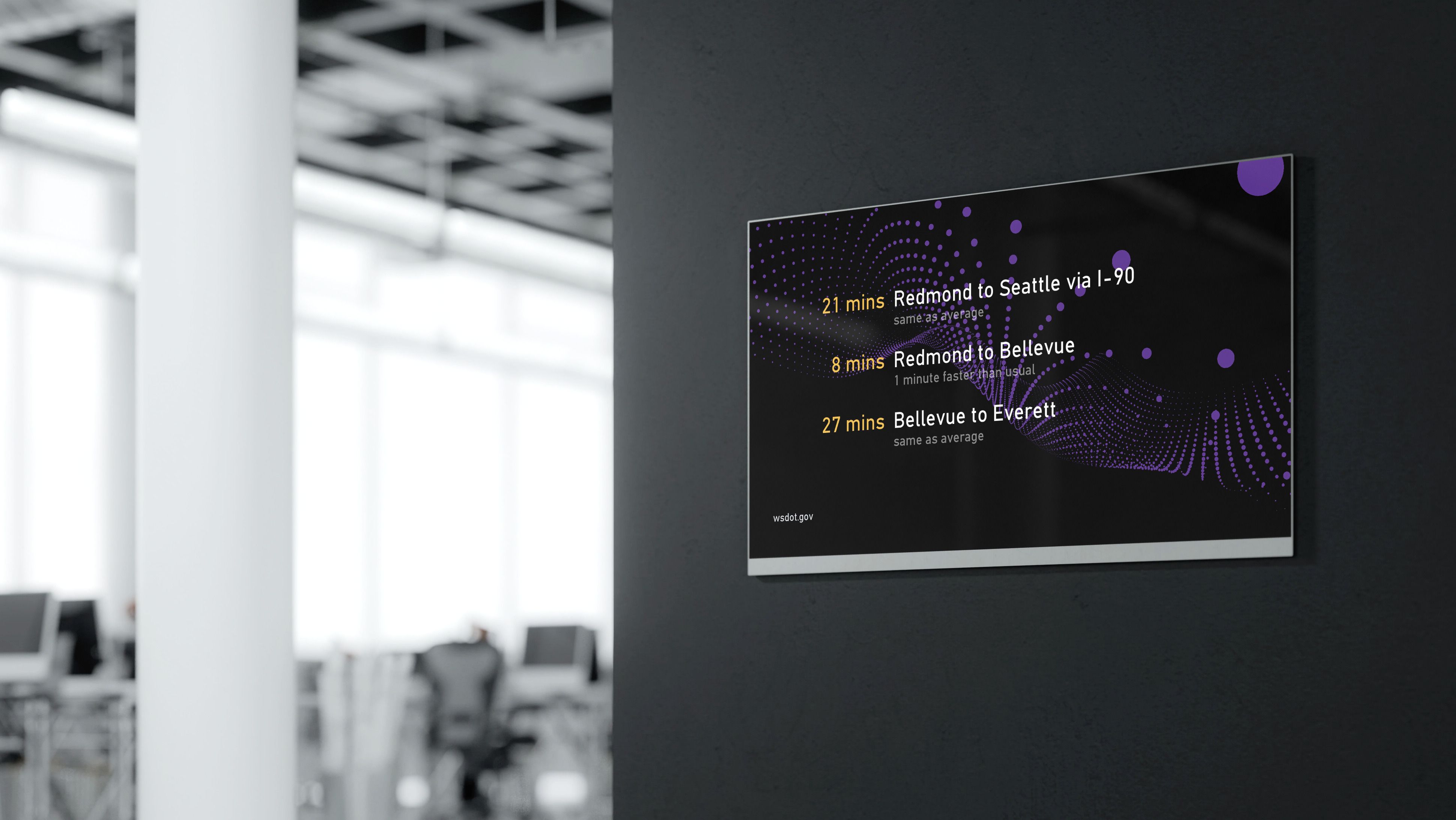
Other panels pulled live data from external APIs: GitHub star counts for Visual Studio Code and vscode-icons, drive times from Redmond to Seattle-area destinations via the WSDOT traffic API, and current weather in each studio location from OpenWeather. A slower-cycling trivia panel surfaced facts about the remote cities (population of Prague, elevation of Helsinki) so distant colleagues felt less abstract.
More personal panels tracked CO₂ estimates from manually logged team travel, and birthdays and work anniversaries (day and month only, never year).
Vegas also consumed presence data from a companion project: a fleet of custom IoT desk indicators built by Lee Murray that broadcast their state over WiFi to an Azure Function. See Presence Indicators.
The reference point was LinkNYC: large-format kiosks that cycle useful local information without demanding attention. That ambient register was the target.
Vegas had to be readable from several metres away, which pushed the typography toward large, high-contrast type on a dark background. Panels rotated on a fixed interval so anyone walking past caught something useful regardless of timing.
One firm constraint: no personal data beyond birthdays and anniversaries, and no notifications, ever. Vegas showed the team calendar, not anyone’s schedule, and never pinged. Ambient screens stop working the moment they ask to be looked at.
Vegas was built in Vue.js and TailwindCSS, running unattended on a Raspberry Pi behind each screen. It consumed events from Microsoft Graph via a service account, with a small JSON config for studio locations and UTC offsets.
The world-clock component handled DST transitions automatically, which mattered: US and European clocks don’t switch on the same date.
The displays ran continuously throughout Building 17. They became part of the environment: designers glanced at a corridor screen on the way to a meeting, clocked the time in London or Boston, and adjusted their Teams message accordingly.
More subtly, Vegas made D3 Studio legible inside a large engineering organisation. PMs and engineers walking past could see that the design team had a full calendar of activity, which turned into a quiet form of advocacy and a practical nudge to actually show up to UxBoard.